PRI is home to seven state scientists who provide objective, reliable, and timely scientific expertise and data to the policymakers, industries, communities, and people of Illinois. These scientists are Illinois’ authoritative experts on the history, current issues, and emerging concerns in archaeology; natural resources and ecology; climatology; entomology; geology; hydrology; and pollution prevention. These positions were established by the University of Illinois Scientific Surveys Act in 110 ILCS 425/20 in 2008.
Office of the State Archaeologist
The Illinois State Archaeologist provides archaeological information and advocates for the public importance of the archaeological record in Illinois. Activities of the Office of the State Archaeologist include:
- Preservation: Identifying, evaluating and planning for the management and preservation of public and private archaeological sites and cultural landscapes in Illinois; working with public and private entities to preserve significant cultural resources in Illinois
- Research: directing and conducting archaeological research in Illinois, with a particular focus on research with a direct economic impact on Illinois’ citizens; enabling smart development and helping preservationists and developers cooperate in achieving their goals
- Data Management: retaining and managing archaeological databases featuring records of survey and excavation reports, photographs, burial mounds, and artifacts; acting as a repository of knowledge and a clearinghouse for distributing information about Illinois’ rich resources
- Education: educating the people of Illinois through events, exhibits, publications and other media; informing other agencies about current legislative changes and programs, regulatory information, and best practices in cultural resource management
State Archaeologist Alleen Betzenhauser

Alleen Betzenhauser, Ph.D., serves as the Illinois State Archaeologist and began her tenure in April 2025. Betzenhauser is widely recognized for her work advancing our understanding of Illinois’ cultural heritage, particularly her groundbreaking research on the Cahokia region and early Mississippian sociopolitical organization. Her efforts extend beyond research — she actively engages with communities, students, and stakeholders to promote archaeology’s role in preserving our shared history. Betzenhauser’s leadership in her former position at the American Bottom Field Station has been marked by a commitment to collaboration, innovation, and fostering a deeper appreciation of Illinois’ archaeological legacy.
Betzenhauser earned a bachelor’s degree in archaeology from Boston University and both a master’s and Ph.D. in anthropology from the University of Illinois Urbana-Champaign.
Previous State Archaeologists were Timothy Pauketat, Ph.D. (February 2019 – March 2025), and Thomas Emerson, Ph.D. (2013 – 2018), who served as the first state scientist.
State Archaeologist website
Ask an Archaeologist
Contact: betzenha@illinois.edu
Office of the State Biologist
The Office of the State Biologist communicates information and provides expert advice to the residents of Illinois and to our legislators and policymakers on issues related to nature, ecology, and conservation. Activities of the Office of the State Biologist include:
- Education and Outreach: Acts as a primary public authority and advisor for biodiversity-related scientific inquiries by producing accessible information for diverse audiences, fostering public and stakeholder enthusiasm for conservation through outreach, presentations, and thought leadership.
- Research: Conducts research on Illinois’ biodiversity that emphasizes its natural history, educational and economic value, and provides practical and applied scientific insights for sustainable biodiversity stewardship and conservation practices.
- Public policy: Identifies emerging conservation challenges, evaluates opportunities for improvement, and develops adaptive, science-based recommendations to inform policies, management actions, and strategic priorities aligned with the latest ecological research.
- Collaboration: Participates in external committees, boards, and working groups, ensuring biodiversity and conservation priorities are represented and contributing to regional and national conservation efforts. Advises stakeholders on emerging trends and opportunities in conservation science, such as technological innovations, and to align biodiversity management strategies with sustainable economic and educational frameworks.
State Biologist Michael Dreslik

Michael Dreslik, Ph.D., serves as the State Biologist. Dreslik’s research generates critical understanding necessary for guiding conservation decisions. With a focus on amphibians and reptiles, particularly chelonians and pit vipers, he is studying some of the most imperiled vertebrate groups in Illinois and around the world. He has led major studies on ornate box turtles, eastern massasauga rattlesnakes, spotted turtles, and Blanding’s turtles that were directly tied to species recovery efforts, mitigating the impact of infrastructure development, and agency planning in Illinois and across the U.S.
Dreslik’s career at INHS began in 1997 while pursuing his doctorate in natural resource ecology and conservation at the University of Illinois Urbana-Champaign. His career has been built on a dedication to field-based research, science for the public good, and the INHS mission.
Contact: StateBiologist@illinois.edu
Office of the State Climatologist
The State Climatologist serves as Illinois’ authoritative voice on climate science and conducts research on and monitors Illinois weather and climate conditions. Activities of the Office of the State Climatologist program include:
- Education and outreach: informing the people of Illinois about long-term climate trends and climate variability; monitoring and responding to current weather and climate conditions, such as drought, heat waves, and heavy rainfall events; providing climate information to state agencies, policymakers, businesses, farmers, and other stakeholders; using social media, media interviews, and presentations to effectively reach Illinoisans.
- Research: conducting applied climate research on issues that impact Illinois, such as drought, heat waves, and heavy rainfall events and reporting the results of this research; working with local, state, and federal agencies to understand and respond to climate-related issues.
- Data Management: preserving Illinois climate and weather records that date to the 1800s and extracting insights from these data.
State Climatologist Trent Ford
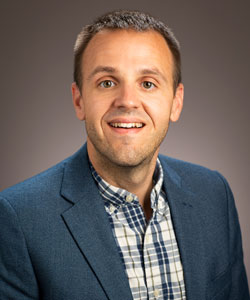
Hydroclimatologist Trent Ford, a native of Roanoke, Illinois, became State Climatologist in 2019. He previously was an assistant professor in the Department of Geography and Environmental Resources at Southern Illinois University Carbondale, where he taught courses on weather, climate, and society and hazardous weather and researched heat wave predictability and ways to use soil moisture data to improve drought monitoring. He earned a bachelor’s in geography from Illinois State University before completing his master’s and Ph.D. at Texas A&M University.
State Climatologist website
Contact: statecli@isws.illinois.edu or 217-333-0729
Office of the State Entomologist
The State Entomologist serves as the authoritative spokesperson on matters related to insects or other arthropods of Illinois. Activities of the Office of the State Entomologist program include:
- Outreach and Education: Serve as the point person for inquiries related to insects and entomology, including but not limited to identification of insect specimens and advice on insect control, and be available for media interviews on insect-related topics.
- Research: Conduct and publish original entomological research with applicability to insect-related issues relevant to biodiversity conservation, food security, sustainable economic growth and Illinois agriculture, forestry, pest management, biodiversity conservation and/or disease vector ecology.
- Public policy: Identify opportunities and threats specific to this field and advises state and federal agencies on insect-related issues of importance to the citizens of Illinois.
State Entomologist Christopher Dietrich
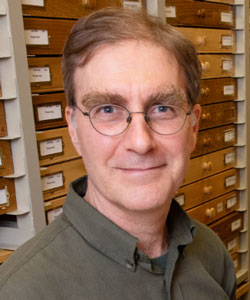
State Entomologist Christopher Dietrich has more than 30 years of entomological research experience. He has conducted field work in 17 countries and published more than 175 refereed scientific papers. He is broadly interested in insect biodiversity, evolution, classification and identification and is a world authority on leafhoppers and treehoppers (Hemiptera: Membracoidea), which include many important agricultural pests, invasive species, and vectors of plant pathogens. His current research focuses on documenting insect biodiversity, resolving phylogenetic relationships among major hemipteran lineages, and developing new tools and infrastructure for identifying and tracking species. He earned his B.S. in biological sciences at the University of Pittsburgh and Ph.D. in entomology at North Carolina State University.
Contact: chdietri@illinois.edu
Office of the State Geologist
The Illinois State Geologist serves as the authoritative spokesperson on matters of geoscience for the state of Illinois; represents Illinois with the Association of American State Geologists; and provides timely, accurate, objective information on research and scientific inquiries to the public, scientists, industry, and governmental agencies. Activities of the Office of the State Geologist include:
- Research: Prioritizing, promoting, directing, and conducting geological research in Illinois, with a focus on addressing key socially relevant issues as well as serving key constituents and stakeholders.
- Public policy: Working with local, county, state, federal, and international agencies on the relevance of the geosciences and its potential positive impact on laws, rule-making, and land- and water-use decision making.
- Education: Educating the public on the geoscience’s importance (water and mineral resources, waste disposal, siting, construction, earth hazards, energy, and environmental protection) through public presentations, field trips, publications, and online information.
- Collaboration: Working with the AASG, USGS, and foreign geological surveys, and serving on national/international committees, all for program development, enhancement and optimization, and implementation for the benefit of scientific organizations and the public.
State Geologist Steve Brown
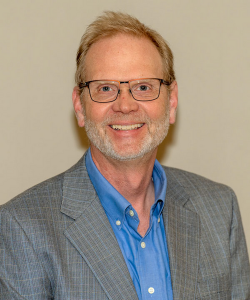
State Geologist Steve Brown has held several key roles at ISGS over the past 19 years, including head of the Quaternary and Engineering Geology Section, chief scientist, and, most recently, deputy director. He has helped shape the survey’s direction through his commitment to applying geologic knowledge to real-world challenges. Steve’s research has advanced the understanding of the glacial geology and stratigraphy of the southern Lake Michigan region. He is currently working with the Illinois Department of Natural Resources’ Coastal Management Program to address issues affecting communities along the Lake Michigan shoreline.
Ask a Geologist
Contact: steebrow@illinois.edu
Office of the State Hydrologist
The Illinois State Hydrologist is responsible for providing science-based information from Illinois State Water Survey studies and other survey experts related to water resource issues, such as floods, droughts, and regional and local water supply. Activities of the Office of the State Hydrologist include:
- Education: Answers questions from citizens, industry, public officials, media, and resource managers with science-based information on watersheds, rivers, groundwater, and other state water resources regarding statewide water issues.
- Data Management: Acts as the central data expert and research coordinator for the State in matters related to water resources.
- Public Policy: Identifies opportunities specific to water supply, conservation, and planning, and advises state and federal agencies on research.
- Collaboration: Serves government committees, task forces, or councils, including (but not limited to) the Illinois State Water Plan Task Force and the Illinois Lt. Governor’s Rivers of Illinois Coordinating Council
State Hydrologist Jenna Shelton
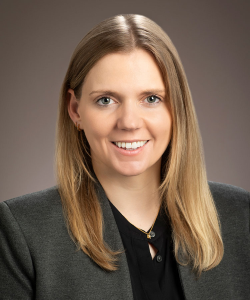
Jenna Shelton, Ph.D., became the State Hydrologist in 2026. She joined the Illinois State Water Survey as director in 2025. A hydrobiogeochemist with 14 years of experience at the U.S. Geological Survey, she has expertise in strategic planning, machine learning, budgeting, the energy-water nexus, workforce development, stakeholder outreach, and international and Tribal Nation relations.
Shelton was previously on the USGS senior leadership team and directed three national research initiatives: STATEMAP, EDMAP, and the Great Lakes Geological Mapping Coalition. She also led education, outreach, international relations, and tribal relations. She has an M.S. in hydrology and water resources from the University of Arizona and a Ph.D. in environmental engineering science from the Colorado School of Mines.
Contact: jshelto2@illinois.edu
Office of the State Pollution Prevention Scientist
The State Pollution Prevention Scientist serves as the authoritative spokesperson on matters of pollution prevention for the State of Illinois. Activities of the Office of the State Pollution Prevention Scientist program include:
- Education and outreach: Conducts educational programs to further the exchange of information, environmental data, and expertise about pollution prevention, hazardous waste reduction and management, and sustainability practices.
- Collaboration: Represents Illinois on the National Pollution Prevention Roundtable and similar organizations. Provides technical information services for industries involved in the generation, treatment, or disposal of hazardous waste and pollution, and on sustainability practices that could both protect the environment and further industrial productivity.
- Research: Conducts research in areas related to reduction of the generation of waste; treatment, recycling and reuse; pollution prevention; emerging contaminants; and other issues.
State Pollution Prevention Scientist John Scott
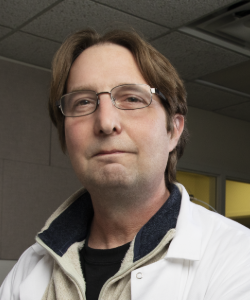
John Scott has worked at the the Illinois Sustainable Technology Center since 2001. He specializes in analytical chemistry and mass spectrometry, with extensive experience developing and applying methods for the characterization of complex environmental, biological, and industrial samples. His research interests include emerging contaminants such as PFAS, microplastics and plastic-associated chemicals, environmental fate and transport, waste-to-energy and resource recovery, thermochemical conversion processes, and pollution prevention.
Contact: zhewang@illinois.edu